16
faculty
About us
The Laboratory of Catalysis and Catalytic Processes (LCCP) is a research group at Department of Energy of Politecnico di Milano that has pioneered multidisciplinary research in the science and engineering of heterogeneous catalysis. In the last decades the research activity of the group has gradually expanded from applications in industrial chemical processes to novel fields associated with energy conversion, environmental protection and sustainable production of fuels and chemicals. The mission of LCCP is the education of students via relevant research in the multidisciplinary field of catalysis science, spanning from fundamental research to industrial applications, with a strong connection with the industrial world and world-leading universities and research centers.
Our numbers
faculty
ECTS delivered/year
industrial partners
academic partners
Catalytic processes for energy and chemical applications have gained increasing strategic relevance in recent years, driven by the need to reduce environmental impact, improve energy efficiency, and diversify energy sources. Our vision is to contribute to this global challenge by advancing fundamental understanding and developing innovative catalytic solutions that enable cleaner, more sustainable technologies. For more than four decades, the Laboratory of Catalysis and Catalytic Processes at the Dipartimento di Energia has been engaged in a broad range of research activities, combining experimental investigation, advanced characterization, and modelling approaches. Through interdisciplinary collaboration and continuous technological innovation, we strive to identify pathways for next-generation energy systems, foster industrially viable processes, and support the transition toward a low-carbon future.
Building on a strong background in heterogeneous catalysis and chemical reaction engineering, the LCCP has developed a comprehensive, multidisciplinary, and multiscale research approach. Our method integrates fundamental understanding, advanced experimentation, and modelling—from the atomic to the reactor scale—to support the development of efficient and sustainable catalytic processes. At the nanoscale, we focus on tailoring catalyst properties through controlled synthesis and advanced characterization. These efforts are complemented by detailed studies of surface reactivity, reaction mechanisms, and kinetics under both steady-state and transient conditions, supported by quantum-chemical modelling (DFT) to elucidate structure–activity relationships at the atomic level. Such investigations are strengthened by ex-situ, in-situ, and operando diagnostic techniques, providing a complete and dynamic picture of catalytic behavior. Our core expertise lies in the rigorous testing and evaluation of heterogeneous catalysts for thermocataltic processes, and more recently also for electrocatalytic, and photoelectrocatalytic processes. Through dedicated experimental setups and flexible testing platforms, we are able to assess catalytic performance under realistic conditions, probing activity, selectivity, stability, and durability across a wide range of reactions and operating environments. This experimental capability represents one of our main strengths and enables meaningful links between fundamental insights and practical applications. At the process and reactor scale, the knowledge gained at lower length scales is integrated into kinetic models and advanced computational fluid dynamics (CFD) simulations. These tools allow us to describe transport phenomena, optimize reactor configurations, and support the design and scale-up of catalytic processes.
Our numbers
Key assets
Team
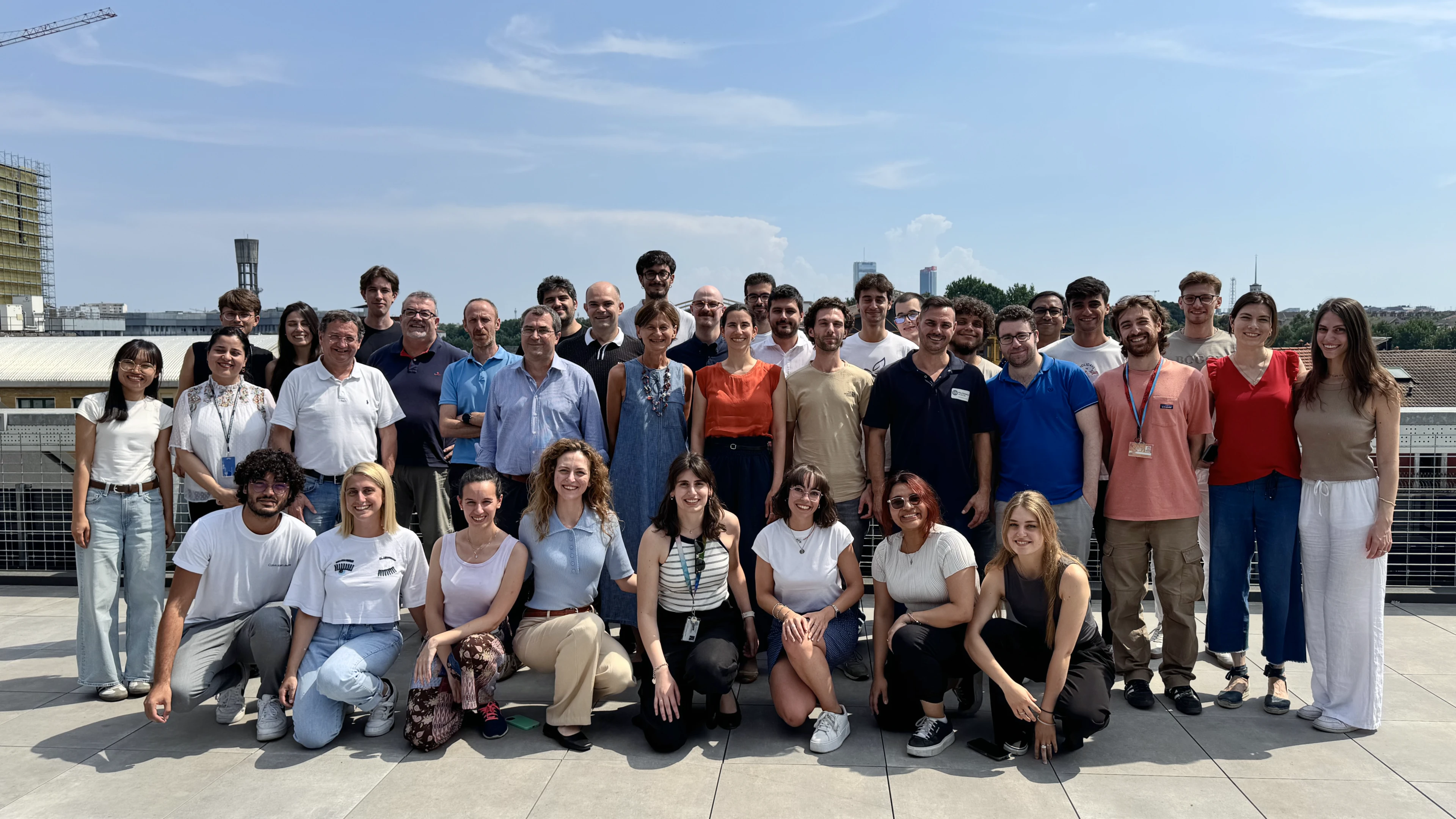
With 16 faculty members and more than 30 between PostDoc and pHD students, the LCCP is one of the largest research gropus in field of catalysis and chemical reaction engineering.
Facilities
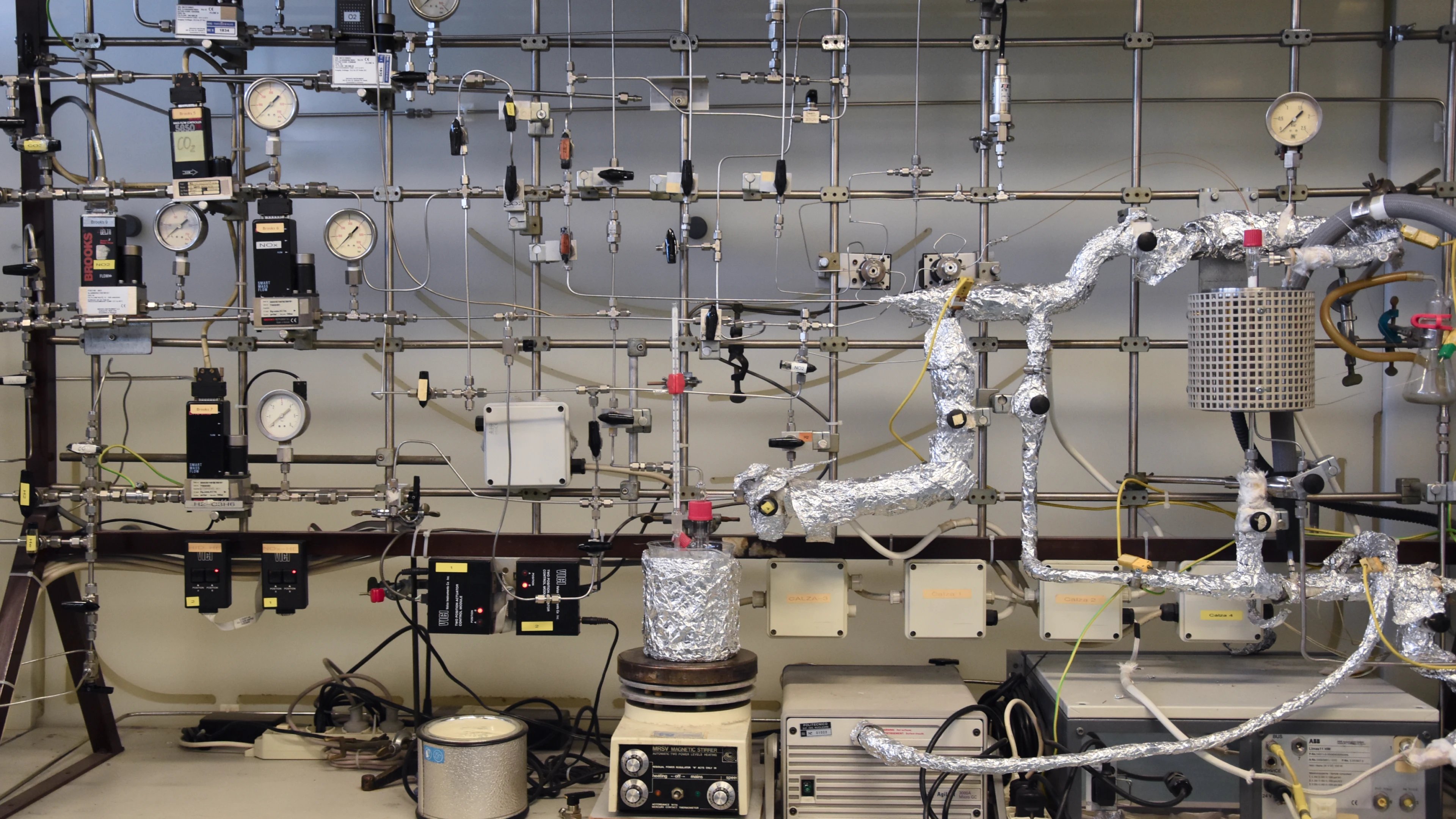
With more than 2.200 m² of dedicated laboratories inaugurated in 2014, we have the space and infrastructure needed to support our research activities effectively. Our facilities include a wide range of catalytic testing rigs, dedicated catalyst preparation areas, and advanced characterization equipment, allowing us to carry out our work with precision and reliability.
Partners
Proudly part of an international network of more than 40 organizations and institutions.
History
The School of Industrial Chemistry at Politecnico di Milano draws on the remarkable legacy of Giulio Natta, Italo Pasquon, and Pio Forzatti, who pioneered catalysis research by combining fundamental studies with industrial applications. The research group under its current name was founded by Pio Forzatti in the late 1980s and has since remained at the forefront of catalysis engineering.